
Lemon Farming


Oman Study Finds Reclaimed Water Can Sustain Lemon Production in Salinity-Affected Areas
Barkaa: The Ministry of Agriculture, Fisheries and Water Resources said tertiary treated wastewater, also known as reclaimed water, could contribute to the sustainability of agricultural activity in salinity-affected areas and support efforts to restore part of the agricultural green belt of the Al Batinah Plain.
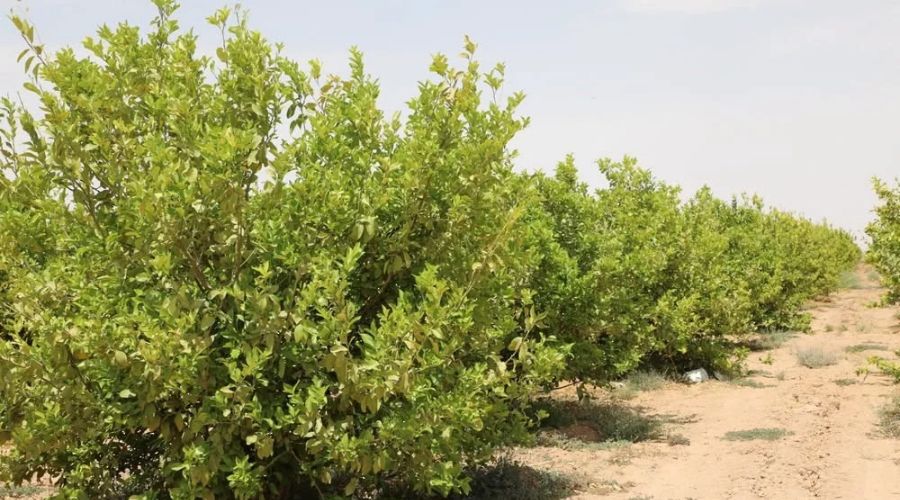
The Ministry conducted a long-term scientific study in cooperation with Nama Water Services Company at the Al Rumais Non-Conventional Water Research Farm in the Wilayat of Barkaa, South Al Batinah Governorate, to assess the use of reclaimed water to irrigate Omani lemon trees (Citrus aurantiifolia).
Engineer Alia Al Hinai, Soil and Water Researcher at the Soil and Water Research Centre of the Directorate General of Agricultural and Animal Research, said Omani lemons were selected because they are among the Sultanate of Oman’s traditional citrus crops of economic and cultural importance, while the research site represents the agricultural conditions of the Al Batinah Plain.
She explained that the study compared a field irrigated with reclaimed water with another irrigated with desalinated groundwater under similar agricultural management conditions. The reclaimed-water irrigation experiment continued for eight years, during which water, soil, plant and fruit-quality indicators were monitored.
The results showed that lemon trees maintained their growth and productivity when irrigated with reclaimed water, with production levels comparable to those of trees irrigated with desalinated groundwater. The findings support the potential use of reclaimed water for sustainable lemon cultivation under the conditions covered by the study.
Al Hinai noted that reclaimed water also contains measurable amounts of nutrients, including nitrogen, potassium and phosphorus, which could provide additional value as a water resource, although the study did not quantify the amount of fertiliser these nutrients could replace.
Regarding soil conditions, measurements showed increases in salinity during some periods, but the increases were not continuous, with levels declining during the following season. Some sodium indicators also increased in soils irrigated with reclaimed water, highlighting the importance of long-term monitoring and appropriate irrigation and drainage management. The study did not indicate any actual deterioration in soil structure.
The study also found that most fruit and juice characteristics were similar between trees irrigated with reclaimed water and those irrigated with desalinated groundwater. The results did not show a consistent pattern indicating cumulative transfer of the measured elements to the fruit as a result of using reclaimed water.
Al Hinai added that fruit harvested during the study underwent microbiological safety testing, with the tested samples complying with the microbiological standards applied in the study, while stressing the importance of continued periodic monitoring.
She said cooperation with Nama Water Services Company represents an important step in translating scientific research into practical applications through specialised studies on the use of reclaimed water in agriculture. The aim is also to develop the Al Rumais Non-Conventional Water Research Farm as a research, extension and scientific reference centre for using reclaimed water under Omani agricultural conditions.
The approach is also being extended to the field through efforts to deliver reclaimed water to farmers in the Al Shakhakhit area of Barkaa, allowing its use to be studied on actual farms and helping transfer accumulated knowledge and experience from research stations and experiments to farmers and investors.
Al Hinai said the eight-year Omani lemon experiment at Al Rumais demonstrates the potential for reclaimed water to become part of the future of agriculture in arid and salinity-affected environments, provided that its use is supported by scientific research, sound management, continuous monitoring and cooperation between research institutions, service providers and farmers.

 OMAN GEARS UP WORK TO LAUNCH NEW INTERNATIONAL FINANCIAL CENTRE
Legal, regulatory and operational preparations for.
 Thawani Ranks Among Middle East’s Top 50 Fintech Companies for Third Consecutive Year
Thawani Named Among Forbes Middle East’s.
 Supporting Sustainable Urban Development: ahlibank participates in Urban October 2026
Muscat, 10 October 2026: Reaffirming its.
 INMA [SME Development Fund] Expands their Financial Product offerings with the Launch of INMA Retail Finance-Masar Auto Finance & Mazaya Consumer Finance
Muscat, 10th October 2026- Marking a.
 FUSO Oman Launches Back-to-School Service Campaign for ROSA Buses
General Automotive Company (GAC), a part.
 Royal Oman Police Reviews Licensing Requirements for Heavy Vehicles
The Inspector General of Police and.
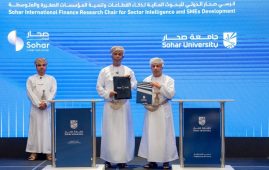 Sohar International Signs Agreement with Sohar University to Establish Oman’s First Bank-Endowed Chair
Muscat, 07 October 2026: Recognising the.
 Driven by Confidence: Nesto Oman Chooses Jetour T1 and T2 for Staff Fleet
Muscat : Jetour Oman, distributed in.
 HM Sultan Haitham Congratulates Saudi King, Crown Prince on Gulf Cup Victory
Muscat: His Majesty Sultan Haitham bin.
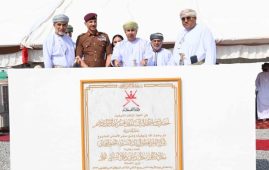 Oman Lays Foundation Stone for National Genome and Human Data Center
Muscat: The Ministry of Health today.
Terms of Use: