


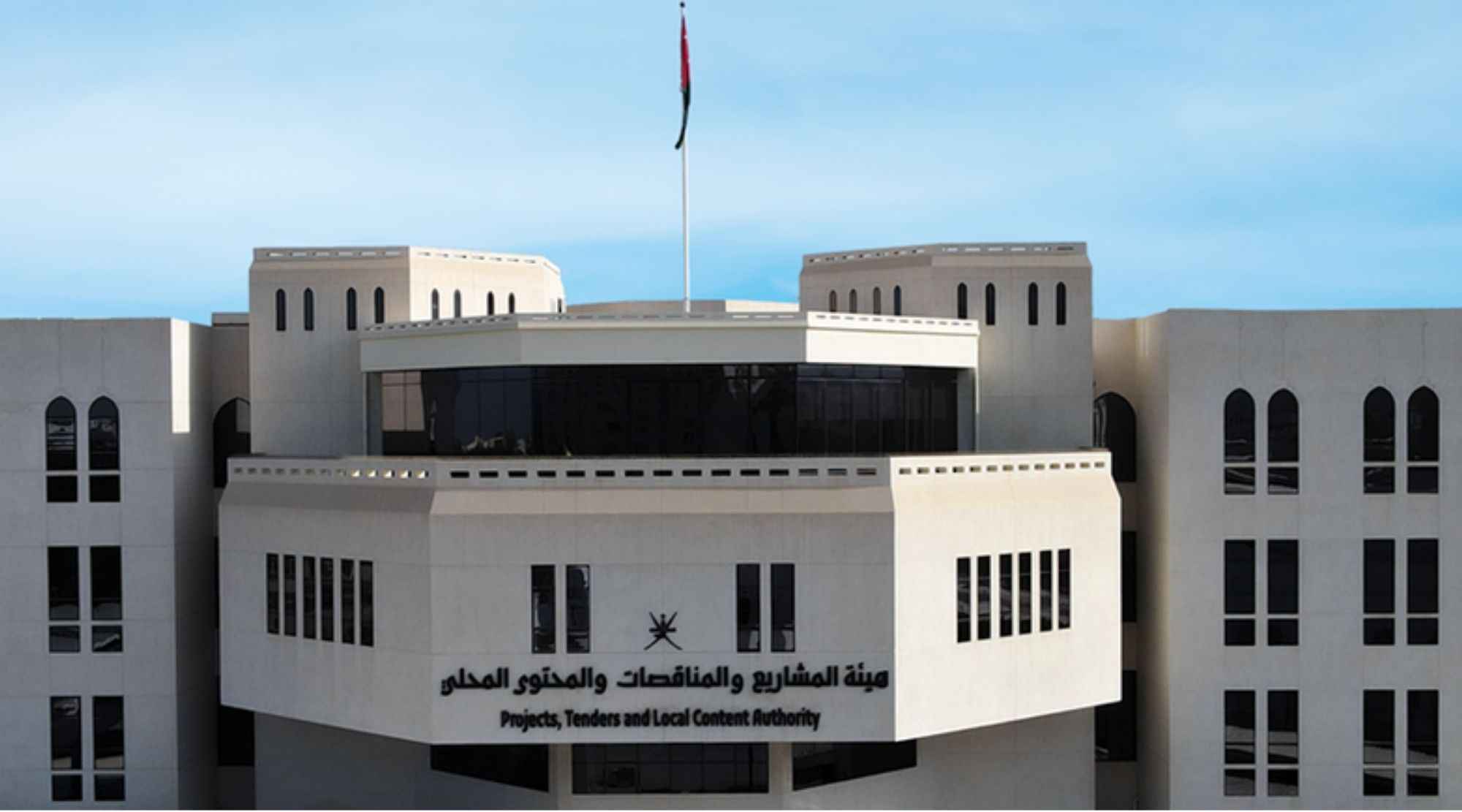
Oman Strengthens Government Project Governance Through 160 Assurance Gateways
Muscat: The implementation of a document cycle and phased assurance gateways under the regulations governing government projects issued by the Projects, Tenders and Local Content Authority has strengthened governance throughout the life cycle of government projects and improved their readiness before progressing between phases.
To date, around 70 government projects have benefited from the application of phased assurance gateways, with 160 gateways implemented to verify that required conditions and outputs have been met before projects move from one phase to another.
The document cycle forms part of an integrated system aimed at improving government project management, enhancing spending efficiency, optimizing available resources within approved budgets, maximizing project impact and reducing change orders.
The Authority’s efforts to review projects, their costs and scopes and improve their management efficiency have contributed to cumulative financial savings of about OMR 280 million, including approximately OMR 70 million achieved during the middle of 2026. The efforts have also contributed to a significant reduction in change orders for development projects.
Eng. Abdullah bin Humaid Al Habsi, Head of the Projects Follow-up Office at the Projects, Tenders and Local Content Authority, said the document cycle and regulations governing government projects represent a shift from multiple procedures and practices towards a unified regulatory framework governing projects from their initial preparation and planning stages through implementation and closure.
He explained that the framework defines the requirements, responsibilities and checkpoints applicable at each stage of the project life cycle.
Al Habsi said the document cycle was developed following a study of the existing government project management system, which identified several operational and organizational challenges, including multiple procedures, overlapping roles and responsibilities, weak performance indicators, insufficient risk assessment and mitigation, and the need for a unified methodology for managing government projects.
The study included an analysis of existing procedures, a review of leading international, regional and local project management practices, gap analysis and examination of successful government practices. These efforts resulted in a document cycle adapted to the nature of government projects in Oman.
The document cycle was developed through a participatory approach involving relevant government entities and technical, financial and legal specialists. This helped align the procedures with the actual needs of government entities and enhance their practical application.
The system was incorporated into the regulations governing government projects issued under Resolution No. 169/2023, alongside circulars related to the implementation of assurance gateways and improving government spending efficiency, as well as the Ministry of Finance circular concerning contract signing and linking contracts to assurance gateways.
The document cycle has since moved from a regulatory framework into practical application across government projects. Progression between project phases is now linked to phased assurance gateways for projects with estimated budgets of OMR 500,000 or more.
Through these gateways, the fulfilment of required conditions and outputs is verified before a project proceeds to the next phase.
The assurance gateways also support proactive project oversight by assessing project readiness at each transition point and identifying challenges and risks at an early stage, enabling stakeholders to take corrective measures before projects advance to subsequent phases.
Interim assessments further improve the quality of information available to decision-makers, support efficient resource allocation, enhance the quality of project outputs and reduce the likelihood of project failure by applying defined requirements and indicators at each stage of the project life cycle.
The system reinforces the concept of phased project governance, ensuring that oversight is not limited to the implementation stage. Instead, planning quality and project readiness are assessed from the early stages and continue through to project closure.
The document cycle applies to all government projects, contributing to the standardization of practices, strengthening governance and transparency, and creating a more integrated environment for managing project-related data and procedures.
The national value of the document cycle and regulations governing government projects lies in establishing a unified reference for project management, improving planning and implementation quality, maximizing the impact of government expenditure, strengthening governance and transparency, and enhancing resource management efficiency.
These efforts support the Projects, Tenders and Local Content Authority’s objectives of improving government spending efficiency and contributing to the achievement of Oman Vision 2040.

more recommended stories
 Renaissance Services strengthens support for ESO’s charity run
Muscat – Renaissance Services strengthened its.
 AJMS Group Supports DDSC Across Compliance Systems Implementation
Dubai: AJMS Group announces its ongoing.
 Oman-UAE Railway Project Advances as Trial Operations Near
Oman-UAE Rail Link Set for Trial.
 Kazakhstan President Receives Credentials of New Omani Ambassador
Oman’s Ambassador to Kazakhstan Presents Credentials.
 Oman Takes Part in Aichi-Nagoya 2026 Asian Games Opening Ceremony
Oman Participates in Opening Ceremony of.
 Oman and Germany Discuss Strait of Hormuz, Red Sea Navigation
Oman, Germany Discuss Freedom of Navigation.
 Sohar International and barq Sign Agreement to Explore New Opportunities in Digital Financial Services
Muscat : Reinforcing its commitment to.
 Oman’s Abdullah Al-Rawahi Dominates Jordan National Rally Round
Oman’s Abdullah Al-Rawahi Wins Fifth Round.
 Oman “Trade Dialogues” to Focus on Re-Exports, Local Suppliers and Logistics
Oman’s “Trade Dialogues” to Explore Economic.
 Oman Expands Global Presence at Marmomac 2026 in Verona
Oman Showcases Marble and Natural Stone.