
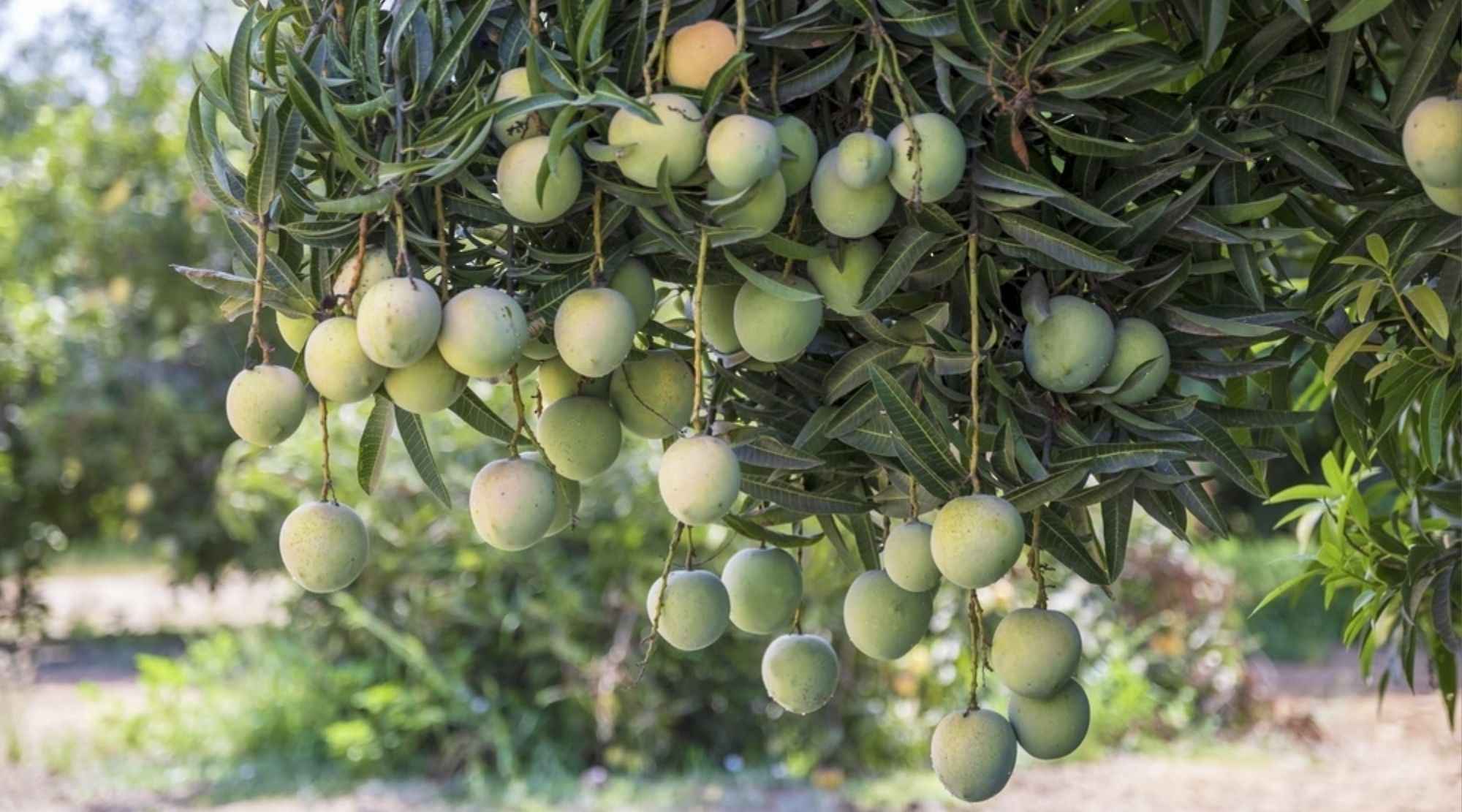
Mango


Oman Expands Mango Production as Imports Reach 46,211 Tonnes
Muscat: The Sultanate of Oman is working to strengthen investment in mango production and enhance the crop’s productivity and competitiveness as part of broader efforts to increase domestic agricultural production, reduce reliance on imports and create economically viable investment opportunities.
Statistical data indicate that Oman imports about 46,211 tonnes of mangoes annually, valued at approximately RO 18.7 million, highlighting strong domestic demand and the potential to retain a greater share of this economic value through local production and the development of an integrated mango value chain.
Dr. Hamdan bin Salim Al Wahaibi, Director General of Agricultural Development at the Ministry of Agriculture, Fisheries and Water Resources, said the volume of mango imports represents an important indicator of the potential of the domestic market and provides investment opportunities for the private sector.
He explained that the Ministry’s approach is to develop mangoes not only as an agricultural crop but as an integrated economic value chain extending from seedling production and cultivation to sorting, packaging, marketing and food processing.
In a statement to Oman News Agency (ONA), Al Wahaibi said Oman has a strong production base for further developing the crop. Mango cultivation currently covers about 3,907 feddans, while production exceeded 17,123 tonnes in 2025.
He noted that increasing production will depend not only on expanding cultivated areas, but also on improving productivity per unit area, enhancing fruit quality, increasing water-use efficiency, selecting economically viable varieties and expanding the use of modern irrigation and farm-management technologies.
The Agricultural Research Station in Sohar plays a key role in supporting mango development through variety studies, characterisation assessments and seedling production, as well as transferring research findings and trial results to farms and investment projects.
Al Wahaibi said the station’s mango genetic bank contains 252 varieties and 708 trees, collected from various governorates in Oman and from 23 countries. This provides a broad genetic base for identifying varieties best suited to local conditions and capable of achieving high productivity and marketability.
He added that research and field trials have resulted in the identification of more than 30 promising varieties in terms of productivity and quality, creating opportunities for targeted expansion into varieties that can deliver stronger economic returns and meet market requirements in terms of quality, volume and production seasons.
Al Wahaibi affirmed that the mango production localisation plan for 2026–2030 aims to significantly increase domestic production by expanding the cultivated area to about 10,300 feddans and raising output to nearly 44,785 tonnes, with an estimated production value of about RO 17 million.
He noted that investment opportunities in mango production will begin to be offered in 2026, marking a shift from simply identifying the import gap to converting it into productive and sustainable commercial investment projects.
The investment opportunities extend beyond mango cultivation and fruit production to cover the wider value chain, including nurseries and seedlings, agricultural inputs, modern irrigation systems, agricultural services, sorting and grading, packaging, refrigeration, storage and transport, as well as food manufacturing and processing.
Al Wahaibi said developing these activities would increase the local value generated by the crop, create opportunities for small and medium enterprises and entrepreneurs, and generate jobs linked to agriculture, logistics, marketing and manufacturing.
He stressed that the success of the approach requires coordinated efforts among research institutions, farmers, the private sector, financing entities and marketing bodies. Research findings and promising varieties, he said, need to be translated into sustainable commercial projects, while investment decisions should be based on clear indicators of production, demand and market conditions.
He noted that a domestic market already absorbing more than 46,000 tonnes of imported mangoes each year provides a clear indication of demand and can reduce market-related investment risks, provided locally produced mangoes remain competitive in price, quality and continuity of supply.
Al Wahaibi said mangoes could serve as a practical example of how an import gap can be transformed into an investment opportunity by directing investment towards an established product with existing domestic demand, supported by local research capabilities and genetic resources.
He added that the next phase will require closer alignment between agricultural investment and market indicators, with the objective not simply being to expand cultivated areas but to establish a productive and competitive sector capable of generating sustainable economic returns, strengthening food security, creating jobs and increasing agriculture’s contribution to economic diversification.
The initiative forms part of Oman’s broader efforts to increase domestic production of food commodities with import gaps, enhance local value and maximise the economic contribution of the agricultural sector.
As the mango development programme moves from research and field trials towards expansion and investment, the existing import market provides a foundation for growth, with the aim of retaining a greater share of the value of mango consumption within the national economy through competitive local production and an integrated value chain.

 Renaissance Services strengthens support for ESO’s charity run
Muscat – Renaissance Services strengthened its.
 AJMS Group Supports DDSC Across Compliance Systems Implementation
Dubai: AJMS Group announces its ongoing.
 Oman-UAE Railway Project Advances as Trial Operations Near
Oman-UAE Rail Link Set for Trial.
 Kazakhstan President Receives Credentials of New Omani Ambassador
Oman’s Ambassador to Kazakhstan Presents Credentials.
 Oman Takes Part in Aichi-Nagoya 2026 Asian Games Opening Ceremony
Oman Participates in Opening Ceremony of.
 Oman and Germany Discuss Strait of Hormuz, Red Sea Navigation
Oman, Germany Discuss Freedom of Navigation.
 Sohar International and barq Sign Agreement to Explore New Opportunities in Digital Financial Services
Muscat : Reinforcing its commitment to.
 Oman’s Abdullah Al-Rawahi Dominates Jordan National Rally Round
Oman’s Abdullah Al-Rawahi Wins Fifth Round.
 Oman “Trade Dialogues” to Focus on Re-Exports, Local Suppliers and Logistics
Oman’s “Trade Dialogues” to Explore Economic.
 Oman Expands Global Presence at Marmomac 2026 in Verona
Oman Showcases Marble and Natural Stone.
Terms of Use: