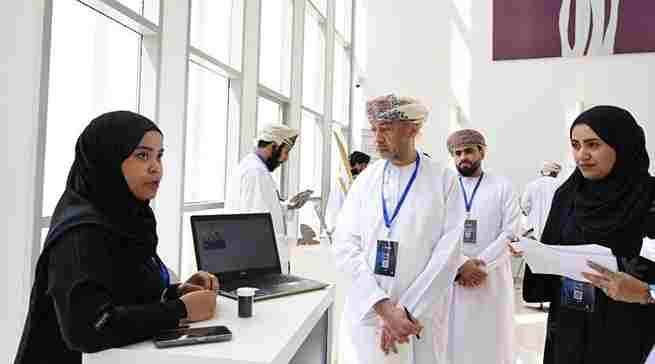




AI, Digital Economy Open New Career Opportunities for Omani Youth

Omanis
Omanis

Oman’s Youth Embrace New Career Paths as AI and Digital Economy Reshape Jobs

Muscat: Rapid technological change and the growth of the digital economy are reshaping traditional employment models, creating new opportunities for young Omanis to develop independent careers, launch projects and explore emerging professions.

The transformation, driven by artificial intelligence, automation and digital innovation, is encouraging young people to move beyond conventional career paths and focus increasingly on skills, entrepreneurship and specialized expertise.

Talal bin Khamis Al-Bahri, Senior Technician at the Center for Educational Technologies at Sultan Qaboos University, said the concept of employment is evolving as young Omanis increasingly become capable of managing their own projects and using AI tools to improve productivity.

He noted that unlike traditional career structures, where employees often follow a fixed path toward senior positions, modern careers increasingly depend on transferable skills and the ability to move across different fields and specializations.

Al-Bahri emphasized that job security in the emerging flexible career model is increasingly linked to continuously developing skills rather than holding a particular position. He said those who keep pace with technological developments and make effective use of AI can strengthen their long-term career prospects.

He also highlighted the growing importance of innovation, experimentation and learning from failure, noting that flexible work environments can encourage employees to participate in decision-making, collaborate across teams and develop innovative solutions.

The digital economy is also enabling young people to establish businesses and provide specialized services remotely, with AI and automation creating new professional opportunities across technology, research, creative industries and other sectors.

According to Al-Bahri, this transformation is gradually shifting economic value toward human knowledge, intellectual capabilities and specialized skills, reinforcing the importance of preparing young Omanis for a rapidly changing global labour market.

Rahma bint Saeed Al-Rashidi, a graphic designer and specialist in strategic communication and generative artificial intelligence applications, said the future of work is increasingly being shaped by the intersection of human expertise and emerging technologies rather than by the creation of entirely separate professions.

She explained that the rapid development of generative AI has already led to new professional roles requiring a combination of creative and technical skills. Among these is prompt engineering, which involves developing precise instructions for AI models to generate more effective and high-quality outputs.

She noted that the expansion of AI is also creating roles that combine technology with creative disciplines, including AI-assisted visual content design, development of specialized prompt libraries and quality management of AI-generated outputs.

In the design sector, Al-Rashidi said AI has become a partner in the creative process, enabling designers to develop concepts, produce prototypes and create visual experiences more quickly, while the designer continues to provide the creative direction and transform ideas into valuable outcomes.

She added that corporate communications is undergoing a similar transformation, with specialists increasingly using AI to analyse audiences, develop ideas, produce content and build more effective communication strategies.

Al-Rashidi emphasized that curiosity and continuous learning are key drivers behind the creation of future professions. She said new career opportunities are often emerging at the intersection of different disciplines, allowing professionals to combine areas such as design and AI or strategic communication and intelligent technologies.

She described this transformation as an opportunity for Omani youth to redefine their relationship with the labour market by developing hybrid skills that combine creativity and technology, while taking the initiative to create professional services that respond to the needs of institutions in the digital age.

For his part, Saeed bin Mubarak Al-Ghannami, Vice Chairman of the Board of Directors of the Oman Information Technology Association, said the Omani labour market over the coming decade is likely to change more in the way existing professions are practised than in the disappearance of traditional professions.

He noted that professions such as medicine, engineering, teaching and accounting will remain essential, but the tools, skills and technologies used within them will evolve significantly. Artificial intelligence, data and digital technologies will increasingly become integrated into established professional roles.

Al-Ghannami said this transformation aligns with the objectives of Oman Vision 2040, particularly in areas such as the digital economy, artificial intelligence, renewable energy, logistics, tourism and sustainability.

He pointed to emerging examples of hybrid professions, including precision agriculture specialists using AI, predictive maintenance experts for power plants, designers of smart tourism experiences and professionals responsible for AI governance within institutions.

He stressed, however, that simply using AI tools does not constitute a sustainable competitive advantage. The greater economic value comes from applying technology to solve real problems, develop new services and fundamentally improve how those services are delivered.

He explained that there is a significant difference between using AI to prepare a conventional marketing plan and developing a platform that enables institutions to analyse customer behaviour, anticipate needs and improve marketing decisions.

According to Al-Ghannami, future competition will therefore be less about who has access to AI and more about who can turn AI into practical economic value.

He said technologies will increasingly become accessible to everyone, while the ability to identify market needs, solve problems and create valuable products and services will determine which skills and jobs remain most competitive.

Key takeaway: Oman’s future labour market is expected to increasingly favour hybrid professionals who combine sector expertise with AI, data and digital skills, creating new opportunities for young Omanis to become not only job seekers, but also creators of new services, businesses and professions.

more recommended stories

Terms of Use:

  • This website Arabian Daily is an individual’s property, not used for any commercial or sales purposes. What you see here are one’s random thoughts in action. I, by no means, endorse any product or party through this, unless stated explicitly.
  • All work you will find here is copyrighted unless stated otherwise. No part of this work can be reproduced in any way with the exception of a) if you share our work, it should link back to this website; b) if you quote any part of our work, it should be properly credited to us with a link to this website.
  • All images used on this website have been taken from open source image websites on the Internet. If any of them are copyrighted to you and you want us to take them down or add credits, please feel free to contact us here, or by using the contact form on this page.
  • The views expressed on Arabian Daily are solely ours. They do not represent any party or any particular school of thought. This website does not promote racism in any form.
  • Privacy Policy:
    This website will respect the readers’ and the writer’s privacy. We do not sell any of their personal or contact information to another company. We do not put your information on spam lists. Also, and more importantly, we are not responsible for the privacy practices of any of our advertisers or website commenters.
  • Reserve Rights: We reserve the right to change the focus on this website, to shut it down, sell it or to change the terms of use at our own discretion.