
oman / school


Oman Welcomes 876,117 Students as New Academic Year Begins
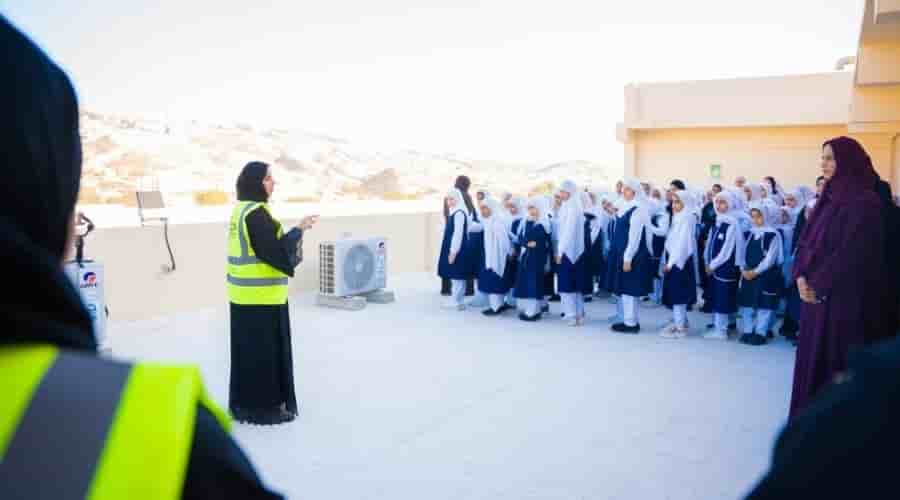
Muscat: A total of 876,117 male and female students will begin the 2026/2027 academic year tomorrow across government schools in the educational directorates of Oman’s governorates.
The total includes 440,899 male students and 435,218 female students.
The number of students enrolled in special education programmes across government and private schools stands at about 3,903. Students are distributed across 1,298 schools, including 341 schools serving Grades 1-4, 128 schools for Grades 5-8, and 165 schools for Grades 9-12, in addition to 664 continuing schools. A total of 115 schools operate during the evening period.
The total number of educational, administrative and technical staff in government schools during the current academic year stands at 68,205. This includes 21,011 male teachers and 47,194 female teachers, as well as 12,200 administrative and technical staff, comprising 4,832 males and 7,368 females.
In a speech marking the start of the new academic year, HE Dr. Madiha bint Ahmed Al Shaibaniyah, Minister of Education, congratulated students at all educational levels, teachers and employees across the education system.
She highlighted the institutional transformation taking place in the education sector following the merger of the former Ministries of Education and Higher Education, Research and Innovation into a single Ministry of Education.
She said the transformation reflects a national vision for an integrated education system that unifies policies and connects the educational pathway from pre-school education through higher education. This, she noted, strengthens alignment between educational outcomes and labour market requirements and enhances the efficiency of the education system.
Dr. Al Shaibaniyah explained that the Ministry’s priorities focus on improving the quality of school and higher education through several pillars, foremost among them ensuring education quality.
As part of efforts to strengthen education-sector governance, the Ministry attaches importance to the outcomes of external evaluations of government and private schools, as well as institutional and programme accreditation processes for non-governmental higher education institutions conducted by the Omani Authority for Quality Assurance of Education.
She said the Ministry seeks to use the outcomes of these processes to enable educational institutions to develop their performance and improve the efficiency of their outputs.
Regarding non-governmental higher education institutions, the Minister said the Ministry is working to empower institutions and provide them with support to develop academic programmes, enhance their ability to keep pace with global developments and diversify their funding sources.
She added that the Ministry is also working to increase Omanisation rates among academic staff and qualify national competencies in these institutions, supporting their educational and research performance.
She praised the progress achieved by Omani higher education institutions in international rankings, describing it as an indication of their growing regional and international presence.
The Minister stressed that investing in teachers represents an investment in the nation’s future, noting that teachers are the fundamental pillar of education quality and the sustainability of its impact.
She said the Ministry takes pride in its qualified teaching workforce, which was selected according to high standards and possesses specialized knowledge and professional competence.
Teacher preparation and qualification programmes, as well as the development of admission systems at universities and colleges, continue to receive attention in line with best practices and the rapid transformations taking place in education.
On curricula and study plans, Dr. Al Shaibaniyah said the Ministry continues to develop them by drawing on modern educational trends and international standards.
These efforts seek to increase the flexibility of educational pathways and specializations, expand students’ options in line with their interests, abilities and aspirations, and equip them with future skills, problem-solving abilities and adaptability.
She added that the Ministry is continuing to implement vocational and technical education programmes in a number of schools across the governorates.
The current academic year will witness an expansion in engineering and industrial specializations, as well as travel and tourism, information technology and business administration programmes.
Regarding the educational environment, the Minister said 18 new school buildings will open across Oman’s governorates during the current academic year.
The new buildings are intended to accommodate the growing number of students, reduce the number of schools operating on two shifts, replace old buildings, and provide additional educational facilities, technologies and scientific laboratories.
She also noted that a number of private schools will open, with the sector recording a growth rate of 24.6% over the past five years.
In higher education, the academic year will see the opening of the new building of the Oman College of Dentistry, the University of Sharqiyah branch in the Wilayat of Sur, and the University College of Duqm.
The developments reflect efforts to expand access to higher education across Oman’s governorates, including economic and development zones.
Addressing scholarship students, the Minister said they represent ambassadors of Oman and urged them to use their scholarships to pursue academic excellence, develop their skills and engage with the world while maintaining pride in their national identity, culture and values.
She encouraged them to ensure that the knowledge and experience they acquire contribute to Oman’s national development efforts.
The Minister also addressed parents, emphasizing their important role in supporting their children throughout their educational journey.
She stressed that, in an increasingly knowledge-based and digital world, families and educational institutions share responsibility for protecting children from excessive use of technology and social media and guiding them towards safe and responsible use.
She encouraged students to devote their time to learning, sports and cultural activities, stressing that cooperation between families and educational institutions remains fundamental to strengthening values, awareness and the ability to respond positively to the changes of the times.
For his part, His Excellency Badr bin Hamoud Al Kharousi, Undersecretary of the Ministry of Education, said that the Ministry has completed the third phase of its developed curriculum plan as part of its efforts to modernize the education system.
The phase included several developments for Grades 7 and 8, including reducing the number of subjects from 11 to 10. Chinese was also added to the list of optional subjects for Grade 12 in schools offering the programme.
His Excellency explained that the Ministry has introduced 11 new curricula, including Social Studies for Grade 8, the English language series for Grade 9, Information Technology for Grades 7 and 8, and Chinese language for Grade 12.
The Ministry has also developed six curricula, including Information Technology “My Digital World” for Grades 3 and 4, Mathematics for Grade 4, English for Grades 5 and 6, and Information Technology for Grade 11.
He added that the Ministry has completed the printing of around 385 textbooks and educational guides covering various subjects, in addition to preparing 16 supplementary curriculum publications.
Several projects have also been launched, most notably the e-learning system and digital repository project, as well as projects to develop educational resources and laboratories covering 42 laboratories. The Digital Atlas project for the Sultanate of Oman and the world is also scheduled to enter its first pilot phase during the current academic year, covering 20% of government schools.
His Excellency affirmed that the Ministry continues to develop the vocational and technical education track as an important pathway for preparing qualified national talent for the labour market.
The track is currently implemented in four governorates — Muscat, North Al Batinah, Dhofar and Al Dakhiliyah — offering nine specializations in engineering, industry, travel and tourism, information technology, and business administration.
Around 1,253 students were enrolled in the track by the end of the last academic year. Under the approved expansion plan for the current academic year, South Al Sharqiyah and South Al Batinah will join the programme, bringing the total number of participating governorates to six.
He further explained that the Ministry is continuing efforts to encourage investment and improve the quality of educational services in the private education sector. The number of private schools is expected to reach 1,366 during the current academic year, compared to 1,264 in the previous academic year, representing an 8% increase.
The Ministry is also preparing an investment guide for private school education featuring a brand utilization system, in addition to issuing the second edition of the investor guide in Arabic and English. The unified “Nibras” curriculum for Quranic education schools has also been launched.
In the field of educational assessment, the Ministry is implementing several development projects, including computerizing results, conducting statistical analysis of examination items for Grades 5-11, and establishing a repository of published examination items and their statistical indicators for General Education Diploma subjects.
Work has also been undertaken to encrypt examination papers for Grades 5-11 at the level of educational directorates in the governorates. In addition, evaluation studies have been conducted for the Fine Arts curriculum for Grade 9 and the Science and Mathematics curricula for Grades 1-4.
During the 2026/2027 academic year, the Ministry is preparing to develop several assessment documents, including those for English, Chinese, students in the second field of private schools, science subjects, and Information Technology.
His Excellency added that the Ministry is continuing the second phase of the “Tharwa 5” programme for discovering gifted students during the current academic year.
The first four editions of the programme benefited around 586 students between 2021 and 2026. The programme uses the “Jums” scale to assess mental abilities, including numerical, verbal and spatial skills, alongside the “Wamda Ibdaa” scale to assess creative abilities and identify gifted students.
Her Excellency Dr. Intisar bint Abdullah Al Ambusaidi, Undersecretary of the Ministry of Education for Educational Support Programmes, affirmed that the Ministry is entering the 2026/2027 academic year with an integrated executive vision focused on education quality, school readiness and the empowerment of students and educational staff, in line with the objectives of Oman Vision 2040.
Her Excellency said that the Ministry is implementing professional preparation and qualification programmes for educational supervisors, school administration supervisors, school principals and newly appointed assistant principals. The programmes also include an orientation programme for around 4,000 new male and female teachers to enhance their professional readiness and integration into the school environment from the outset.
She explained that the Ministry has completed the formation of central and decentralized educational supervision teams at the Ministry’s general office and educational governorates, based on external evaluation results and feedback. Secondment decisions for educational supervision and school administration positions have also been issued according to standards of efficiency, excellence and leadership ability, with the aim of supporting schools and improving learning outcomes.
In the field of quality assurance, the Ministry is implementing a national plan to prepare public and private schools for external review by the Omani Authority for Quality Assurance of Education. The plan targets 200 schools in nine educational governorates and includes training for 1,575 participants from self-evaluation teams, school administrations and educational supervision. The initiative seeks to promote a culture of self-evaluation, continuous improvement and data-based decision-making.
Regarding student and scouting activities, Her Excellency said that the Ministry continues to implement scouting, sports, cultural, scientific and musical programmes, while developing leadership skills, volunteerism and citizenship values.
More than 203 programmes and events were implemented during the last academic year, while plans for the new academic year focus on expanding leadership programmes, discovering talents and strengthening Gulf and international participation.
She noted that the Ministry is preparing to implement the Student Cultural and Literary Festival as a national platform for discovering talents and developing students’ creative abilities in culture, literature and the arts. The festival will feature competitions and activities in school theatre, debates, oratory, classical Arabic speaking, visual presentations and art exhibitions, in cooperation with relevant educational, cultural and artistic institutions.
Her Excellency affirmed that scientific innovation and artificial intelligence are key pillars of the Ministry’s plans. These efforts include promoting a culture of innovation, organizing scientific Olympiads and participating in regional and international competitions in mathematics, physics, chemistry, biology, nuclear science, robotics and artificial intelligence.
The Ministry is also preparing to implement the fifth edition of the Oman Science Festival during the 2026/2027 academic year, with the aim of strengthening science, technology, engineering and mathematics in schools and transforming students’ interest in science into opportunities for creativity and innovation.
She added that the Ministry will begin implementing the artificial intelligence framework for school education during the new academic year. The framework aims to regulate the safe and responsible use of smart technologies through clear governance, capacity building for teachers and educational leaders, development of students’ digital and artificial intelligence skills, and implementation of measurable and scalable pilot projects.
In career guidance and student counselling, the Ministry has developed digital services and specialized programmes to support students in making informed educational and career decisions. These include electronic registration for first-grade students, transfer and re-enrolment services, as well as the “Work Experiences”, “My Specialization, My Profession” and “Enhancement” programmes.
The Ministry is also implementing entrepreneurship and financial literacy programmes that have benefited tens of thousands of students.
Her Excellency affirmed the Ministry’s interest in student entrepreneurship through cooperation with national institutions and plans to organize a student entrepreneurship carnival. The event will provide students with opportunities to present their ideas and projects, develop their innovative and practical skills, and connect their learning with labour market needs and future opportunities.
On international partnerships, Her Excellency stressed that cooperation between Oman and UNESCO represents an important avenue for supporting equity in education, lifelong learning, education for sustainable development and higher education.
She highlighted the expansion of UNESCO Chairs in Omani higher education institutions, Oman’s accession to the UNESCO Convention against Discrimination in Education, and the joining of Muscat, Nizwa and Sur to the UNESCO Global Network of Learning Cities.
She further explained that Oman continues its efforts in green education and addressing climate change through participation in relevant international networks and initiatives, while aligning national initiatives with international standards. These efforts seek to enhance education quality and equal opportunities and strengthen the links between education, innovation, sustainability and future requirements.
Her Excellency concluded by emphasizing that the Ministry’s plans and programmes reflect an integrated national approach linking the development of educational staff, improvement of school performance, student empowerment in leadership, innovation and future skills, and the strengthening of national and international partnerships.
She said these efforts contribute to improving learning outcomes and preparing a generation that is confident in its abilities, proud of its identity and capable of contributing to sustainable national development.
For his part, His Excellency Majid bin Saeed Al Bahri, Undersecretary of the Ministry of Education for Administrative and Financial Affairs, outlined the Ministry’s preparations for the start of the new academic year.
He said that the Ministry has completed the procedures for appointing 3,980 male and female teachers nominated for employment this year. The appointments include 1,211 male teachers, representing 30.5%, and 2,769 female teachers, representing 69.5%, to meet the actual needs of educational bodies across various specializations.
He added that the total number of external transfer requests submitted this year by Omani teaching staff and related personnel reached 8,048. Of these, 7,193 requests, or 89.4%, were submitted by females, while 855, or 10.6%, were submitted by males.
A total of 2,796 teachers were transferred, representing 34.7% of all transfer requests. This included 367 male teachers, or 13%, and 2,429 female teachers, or 87%.
Regarding school construction, expansion, maintenance and restoration projects, His Excellency said that OMR 15 million was approved during the 2026 fiscal year for school expansion projects, with implementation scheduled at 40 schools.
Work is currently underway at 80 schools, and 35 expansion projects are expected to be completed and operational by the beginning of the new academic year.
He added that OMR 7 million was allocated to the Directorates General of Education to renovate around 147 schools, while OMR 9.5 million was allocated for comprehensive maintenance and structural treatment of a number of schools.
A further OMR 2.6 million was allocated to prepare and refurnish 52 science laboratories. He noted that the project to replace air-conditioning units at all educational stages has been completed, with 96,000 units replaced at a total cost of OMR 11 million.
In the area of digital initiatives, His Excellency explained that the “Noor” educational platform has been implemented in all schools, achieving 100% coverage, and will serve as the main platform for managing educational services.
The Digital Atlas platform has also been activated across all schools, enhancing the use of data and geographical information in the educational process and linking the platform with “Noor” to facilitate access for beneficiaries.
He added that the virtual science laboratories project has been activated, enabling students from Grades 2 to 12 to conduct around 387 scientific experiments and enriching practical and experimental learning.
He further pointed out that, as part of efforts to develop the education sector’s digital infrastructure, the Ministry has completed the computerization of academic results by converting paper grade records dating from 1970 to 2006 into archived electronic records.
Specialized artificial intelligence laboratories have also been equipped in the educational directorates, providing advanced environments for innovation, research and development in artificial intelligence and emerging technologies.
For his part, His Excellency Dr. Abdullah bin Ali Al Shibli, Undersecretary of the Ministry of Education for Higher Education, affirmed that the higher education sector has completed its preparations to receive students for the 2026/2027 academic year.
He explained that preparations began early through analysing data on General Education Diploma graduates, registration, admission and available capacity, in coordination with higher education institutions. The efforts aim to support the planning of study opportunities and respond to students’ numbers and needs.
His Excellency said that the Unified Admission Centre contributed to these efforts through data analysis and management of registration, sorting and admission procedures, as well as the development of electronic and guidance services and expansion of capacity.
The number of study seats offered reached 34,113, representing a growth of around 17% compared to the previous academic year. Meanwhile, the number of students who received study offers in the first sorting reached 33,031 male and female students, an increase of nearly 20% over the previous year.
In line with the growth in the number of General Education Diploma graduates and the expansion of educational options available to students, His Excellency explained that the new academic year will witness an increase in internal and external scholarship opportunities.
He added that the Ministry will continue developing the scholarship and grant system to enhance the efficiency of benefiting from available study opportunities while taking into account national priorities and labour market needs.
The Ministry, represented by the Directorate General of Scholarships, is also continuing to strengthen coordination with higher education institutions and relevant bodies inside and outside Oman, expand priority specializations and develop partnerships that contribute to providing additional study opportunities and scholarships for students.
His Excellency pointed out that preparations also include improving services for scholarship recipients, implementing orientation and guidance programmes for new students, strengthening communication and follow-up channels, continuing digital transformation and simplifying procedures.
These measures are aimed at improving the student experience and enhancing the efficiency of services provided throughout students’ academic journeys.
Regarding private higher education institutions, His Excellency said that the Ministry, represented by the Directorate General of Private Universities and Colleges, is monitoring the readiness of institutions to receive students for the new academic year from academic, administrative and organizational perspectives.
The monitoring also covers student facilities, services and accommodation to ensure the provision of a safe, suitable and stimulating educational environment for students.

 Renaissance Services strengthens support for ESO’s charity run
Muscat – Renaissance Services strengthened its.
 AJMS Group Supports DDSC Across Compliance Systems Implementation
Dubai: AJMS Group announces its ongoing.
 Oman-UAE Railway Project Advances as Trial Operations Near
Oman-UAE Rail Link Set for Trial.
 Kazakhstan President Receives Credentials of New Omani Ambassador
Oman’s Ambassador to Kazakhstan Presents Credentials.
 Oman Takes Part in Aichi-Nagoya 2026 Asian Games Opening Ceremony
Oman Participates in Opening Ceremony of.
 Oman and Germany Discuss Strait of Hormuz, Red Sea Navigation
Oman, Germany Discuss Freedom of Navigation.
 Sohar International and barq Sign Agreement to Explore New Opportunities in Digital Financial Services
Muscat : Reinforcing its commitment to.
 Oman’s Abdullah Al-Rawahi Dominates Jordan National Rally Round
Oman’s Abdullah Al-Rawahi Wins Fifth Round.
 Oman “Trade Dialogues” to Focus on Re-Exports, Local Suppliers and Logistics
Oman’s “Trade Dialogues” to Explore Economic.
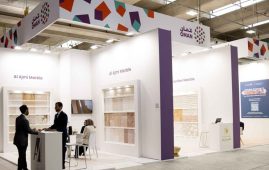 Oman Expands Global Presence at Marmomac 2026 in Verona
Oman Showcases Marble and Natural Stone.
Terms of Use: