
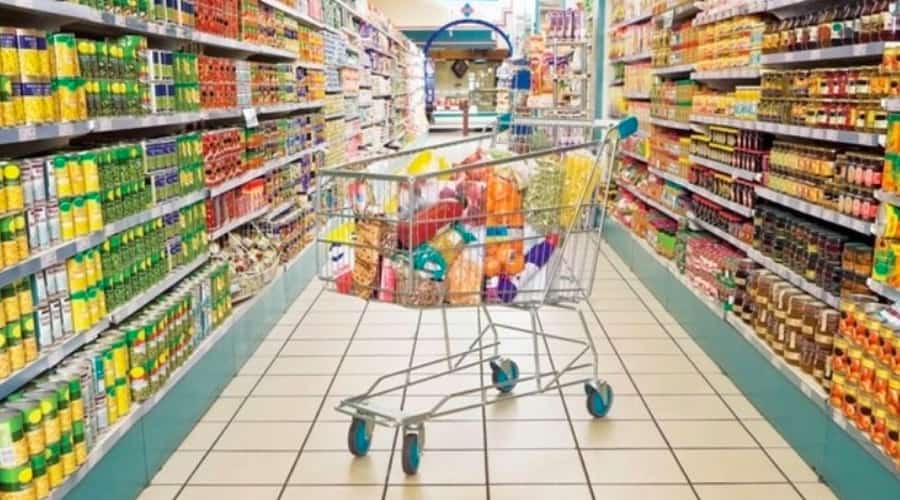
supermarket


Muscat: The Ministry of Economy indicated that the average inflation rate, according to the Consumer Price Index (CPI) in the Sultanate of Oman, during the period from 2021 to 2024 did not exceed 1.4 percent, which is lower than the target of the Tenth Five-Year Plan of 2.8 percent as an annual average over the years of the plan’s implementation.
The ministry confirmed that the inflation rate, according to the consumer price index, in the Sultanate of Oman remained at moderate levels during the first two months of this year, and is expected to remain within the target rates set in the tenth five-year plan through 2025.
The Ministry explained that the Sultanate of Oman continues to adopt the necessary measures and procedures this year to maintain the inflation rate within the economic and monetary policy targets and limit its impact on local markets and economic activities.
The Ministry also stressed that global inflation developments are subject to continuous monitoring, especially in light of the uncertainty associated with the impact of trade policies and rising global customs duties, and the potential repercussions this may have on the path of inflation and global economic growth in the coming period.
Dr. Salem bin Abdullah Al Sheikh, official spokesperson for the Ministry of Economy, said: “Progress in implementing sustainability priorities and strengthening the country’s financial position, in accordance with the objectives of Oman Vision 2040, has provided space over the past years for adopting a number of proactive measures and procedures that have effectively contributed to containing inflation.”
The official spokesperson for the Ministry of Economy added in a statement to the Oman News Agency that statistical data on consumer spending during the current year showed a decline in the inflation rate, according to the consumer price index in the Sultanate of Oman, by 0.32 percent in February 2025 compared to January of the same year.
He explained that the annual inflation rate reached approximately 1% in February compared to the same month in 2024. This is attributed to the stability of prices in several key groups that comprise the inflation index, most notably housing, water, electricity, gas, and other fuels, tobacco, and communications.
He pointed out that the rise in prices of some other groups was limited, such as: the food and non-alcoholic beverages group, the clothing and footwear group, the furniture, household equipment and routine home maintenance group, the culture and entertainment group, the education group, and the restaurants and hotels group. In contrast, the index numbers rose in three groups: the health group, the transportation group, and the miscellaneous goods and services group, by rates of 3.2 percent, 3.4 percent, and 6.3 percent, respectively.
On a geographical scale, the Ministry of Economy’s official spokesperson explained that statistical data indicates variations in inflation rates across the Sultanate of Oman’s governorates during February compared to the same month in 2024.
He pointed out that the highest inflation rate, according to the consumer price index, was recorded in Musandam Governorate and Al Dakhiliyah Governorate at 1.8 percent, followed by South Al Sharqiyah Governorate and Al Wusta Governorate at 1.5 percent each, 1.2 percent in Al Dhahirah Governorate, and about 1 percent in Muscat Governorate, Dhofar Governorate, and Al Buraimi Governorate. The lowest inflation rate was recorded in North Al Batinah, North Al Sharqiyah, and South Al Batinah Governorates at 0.6 percent, 0.5 percent, and 0.1 percent, respectively.
The official spokesperson for the Ministry of Economy added that the continued decline in global inflation rates over the past year was reflected in a 2.5 percent decline in the import price index for the Sultanate of Oman by the end of the fourth quarter of 2024 compared to the same period in 2023. The decline was noticeable at 25.2 percent in the prices of mineral fuels, mineral lubricants and related materials, and the prices of industrial machinery and transportation equipment, which declined by 15.8 percent. In contrast, the prices of various manufactured goods rose by 14.4 percent, oils, fats and animal vegetable waxes by 11.9 percent, food and live animals by 9.1 percent, chemicals by 8 percent, goods classified by material by 6.4 percent, and beverages and tobacco by 6.2 percent, with a slight increase in the prices of non-edible raw materials by 0.2 percent.
He explained that global inflation has witnessed a significant decline over the past two years, as a result of the trend of most global central banks since 2021 toward continuously raising bank interest rates to limit the exacerbation of inflation during the period following the outbreak of the pandemic, which led to it reaching unprecedented levels in 2022.
The official spokesperson for the Ministry of Economy stated that the results of these monetary policies were positive during 2023 and 2024, as inflation began to decline, gradually approaching its target levels. This prompted several central banks to begin reducing interest rates in 2024, a move seen as a sign of the success of inflation containment efforts.
He pointed out that the International Monetary Fund’s forecasts predict this trend will continue, with global inflation declining to around 4.2 percent in 2025 and 3.5 percent in 2026. However, developments in early 2025 have brought inflation back to the forefront of international attention, amid escalating protectionist policies and the imposition of new customs duties, raising uncertainty about the future trajectory of global inflation.
Global food prices were on the rise in February 2025, according to the Food and Agriculture Organization (FAO) index. The food price index rose by about 1.6 percent compared to its level in January of this year. The organization indicated that the meat price index remained stable, while grain prices recorded a slight increase. Other indicators witnessed varying increases, with the highest rates of increase recorded in the prices of sugar, dairy products, and vegetable oils. Although the global food price index in February 2025 was approximately 8.2 percent higher than its level in February 2024, it is still below the peak it reached in early 2022, when food prices were significantly affected by the repercussions of global crises.

 117 Companies Benefit from Oman Civil Aviation Authority Local Content Programmes
117 Companies Benefit from Civil Aviation.
 Oman Opens Two Major Road Projects in Al Dakhiliyah
Nizwa: The Ministry of Transport, Communications.
 Oman Reaffirms Commitment to Combating Human Trafficking Ahead of World Day
Muscat, July 29 (ONA) — The.
 Oman Crude Oil Price Falls $9.97 to $87.11 Per Barrel
Muscat: The official price of Oman crude.
 Three Die from Hantavirus in Venezuela, Health Ministry Says
Caracas: Venezuelan health authorities announced today.
 Tender Results of Government Treasury Bills Worth OMR 60.8 Million Issued
Muscat (ONA) : The total issuance.
 LuLu Exchange brings Argentina Fans together for A Football Match Watch Party in Oman
Muscat, Oman – 22 June 2026:.
 His Excellency the Inspector General of Police and Customs issues the Executive Regulations for the National Records Law
His Excellency Lieutenant General Hassan bin.
 Riyada, SEZAD Launch “Riyada Deal” Initiative to Connect SMEs with Investors in Duqm
Duqm: The Small and Medium Enterprises.
 Khazaen Economic City Signs RO 2 Million Food Factory Expansion Agreement
Khazaen Food City Attracts New Investment.
Terms of Use: